IAS 21 The Effects of Changes in Foreign Exchange Rates, With Journal Entries- accountely.com

IAS 21 The Effects of Changes in Foreign Exchange Rates, With Journal Entries

Three rates, three categories of balance, and one rule that decides everything: monetary items retranslate, non-monetary items at historical cost do not. A full worked foreign purchase from transaction date through year end to settlement.

Read more →
IAS 23 Borrowing Costs: When Interest Becomes Part of the Asset - accountely.com

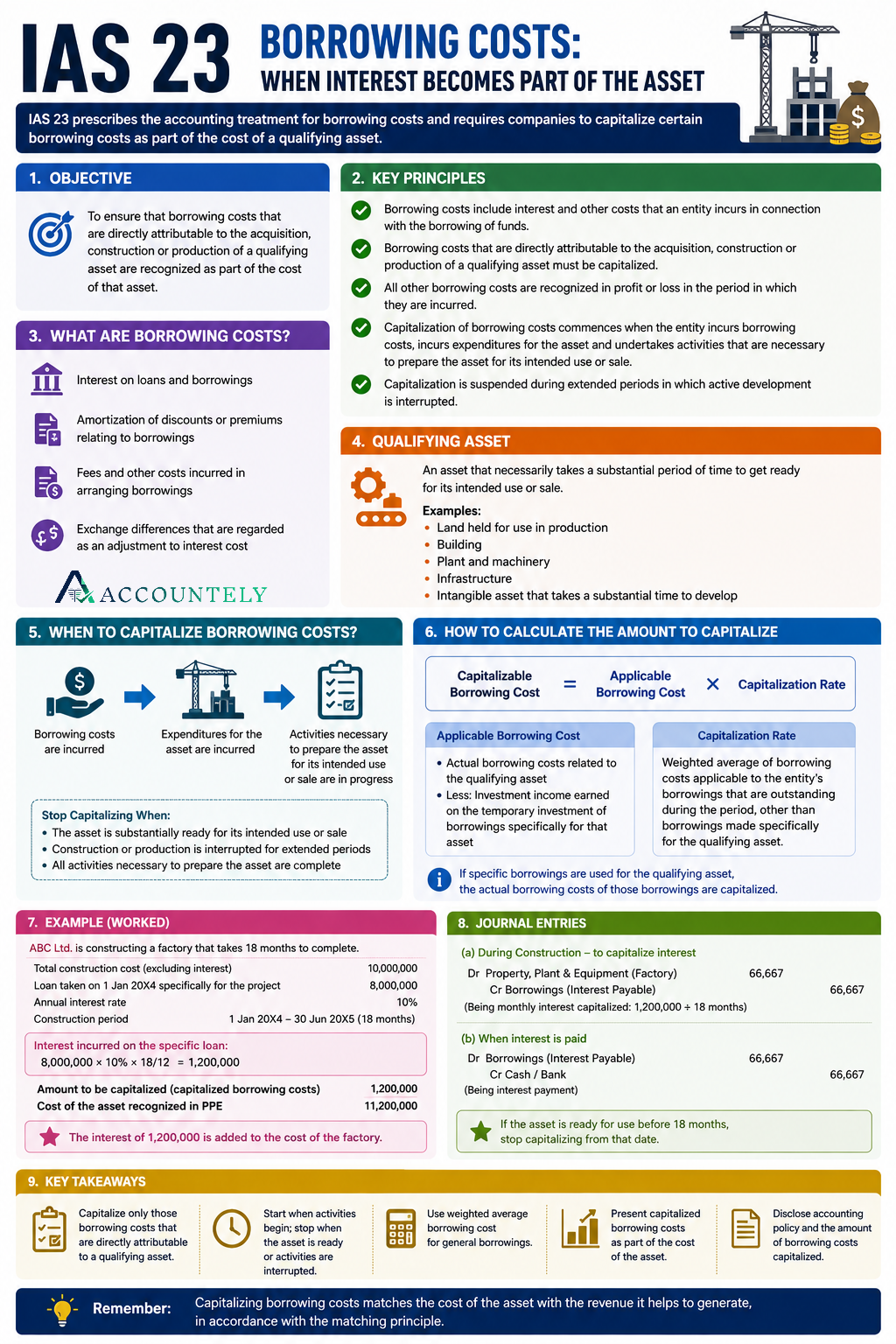
IAS 23 Borrowing Costs: When Interest Becomes Part of the Asset

Interest incurred while building a qualifying asset is capitalised, not expensed. Here is what counts as a qualifying asset, the difference between specific and general borrowings, worked calculations of both, and the three timing rules.

Read more →
IFRS 5 Held for Sale and Discontinued Operations: Two Tests, Not One- accountely.com

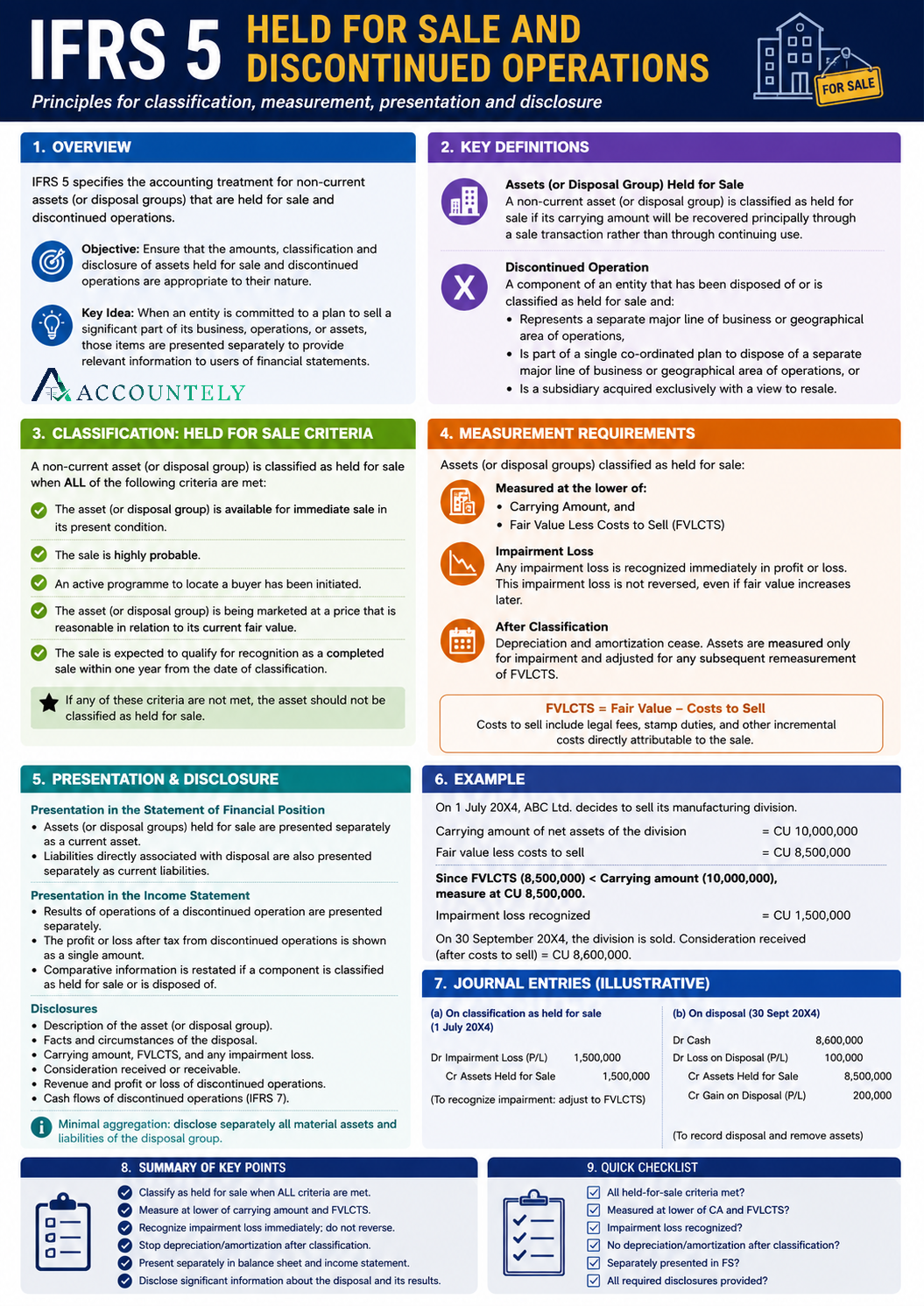
IFRS 5 Held for Sale and Discontinued Operations: Two Tests, Not One

An asset can be held for sale without being a discontinued operation. Here are both classification tests, why depreciation stops at classification, and the asymmetry that catches everyone — income statement comparatives are restated, balance sheet ones are not.

Read more →
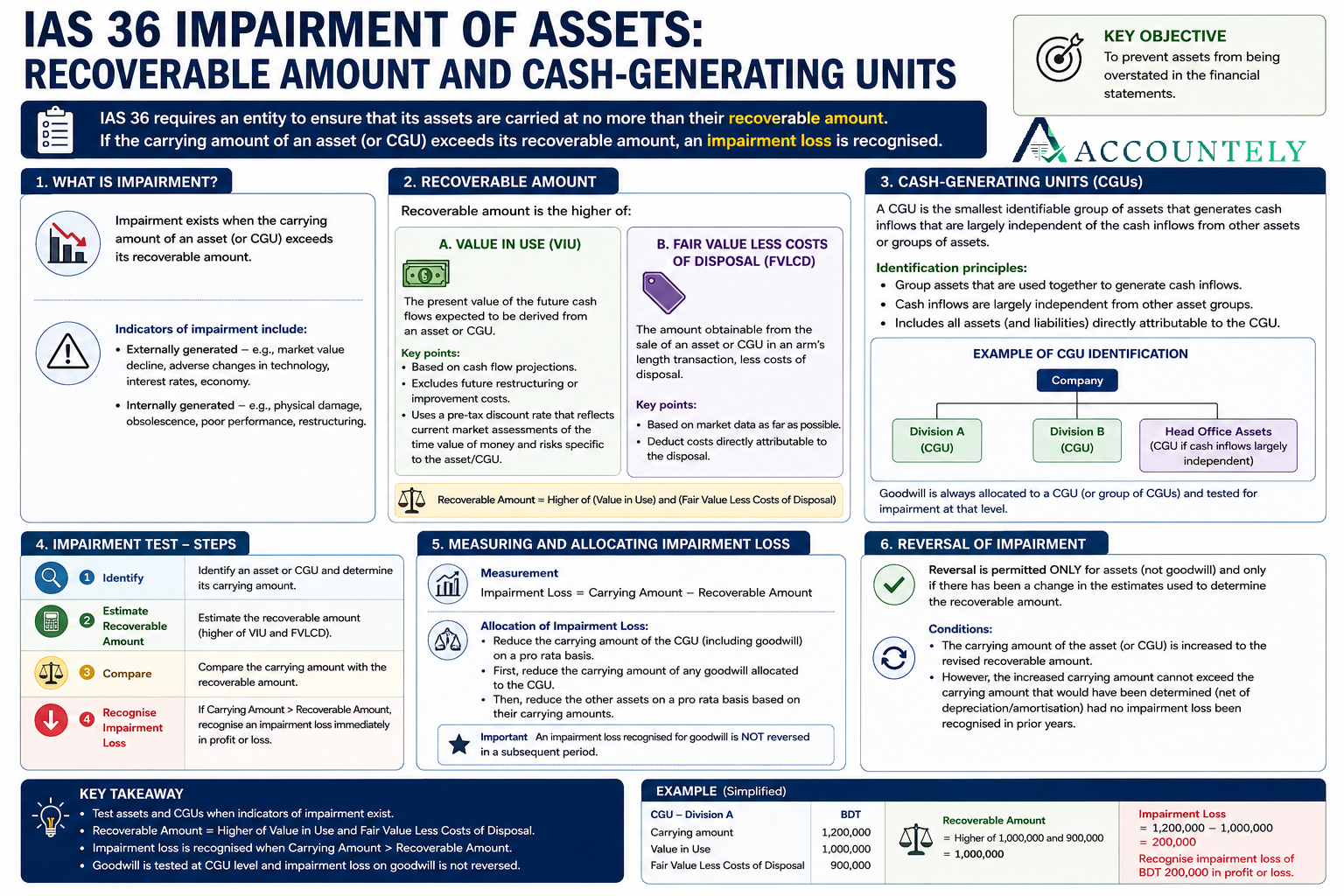
IAS 36 Impairment of Assets: Recoverable Amount and Cash-Generating Units - accountely.com

IAS 36 Impairment of Assets: Recoverable Amount and Cash-Generating Units

Recoverable amount is the HIGHER of fair value less costs of disposal and value in use — the single most commonly inverted rule in the standard. Worked examples for a single asset and a CGU, plus why goodwill impairment is never reversed.

Read more →
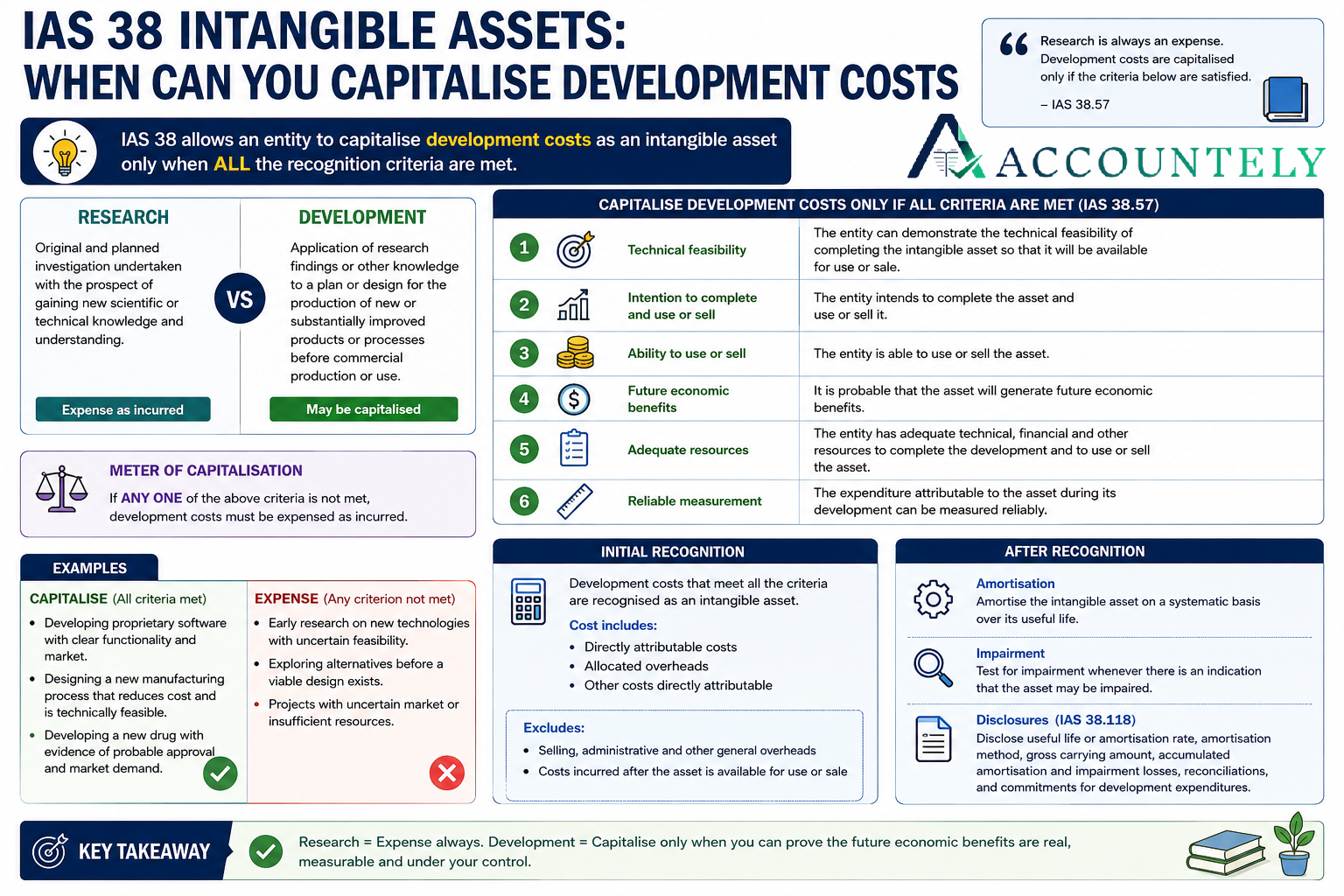
IAS 38 Intangible Assets: When Can You Capitalise Development Costs - accountely.com

IAS 38 Intangible Assets: When Can You Capitalise Development Costs?

IAS 38 is mostly a standard about saying no. Research is always expensed, development is capitalised once six criteria are met, and internally generated brands never qualify. The PIRATE criteria and a worked split of a real project spend.

Read more →
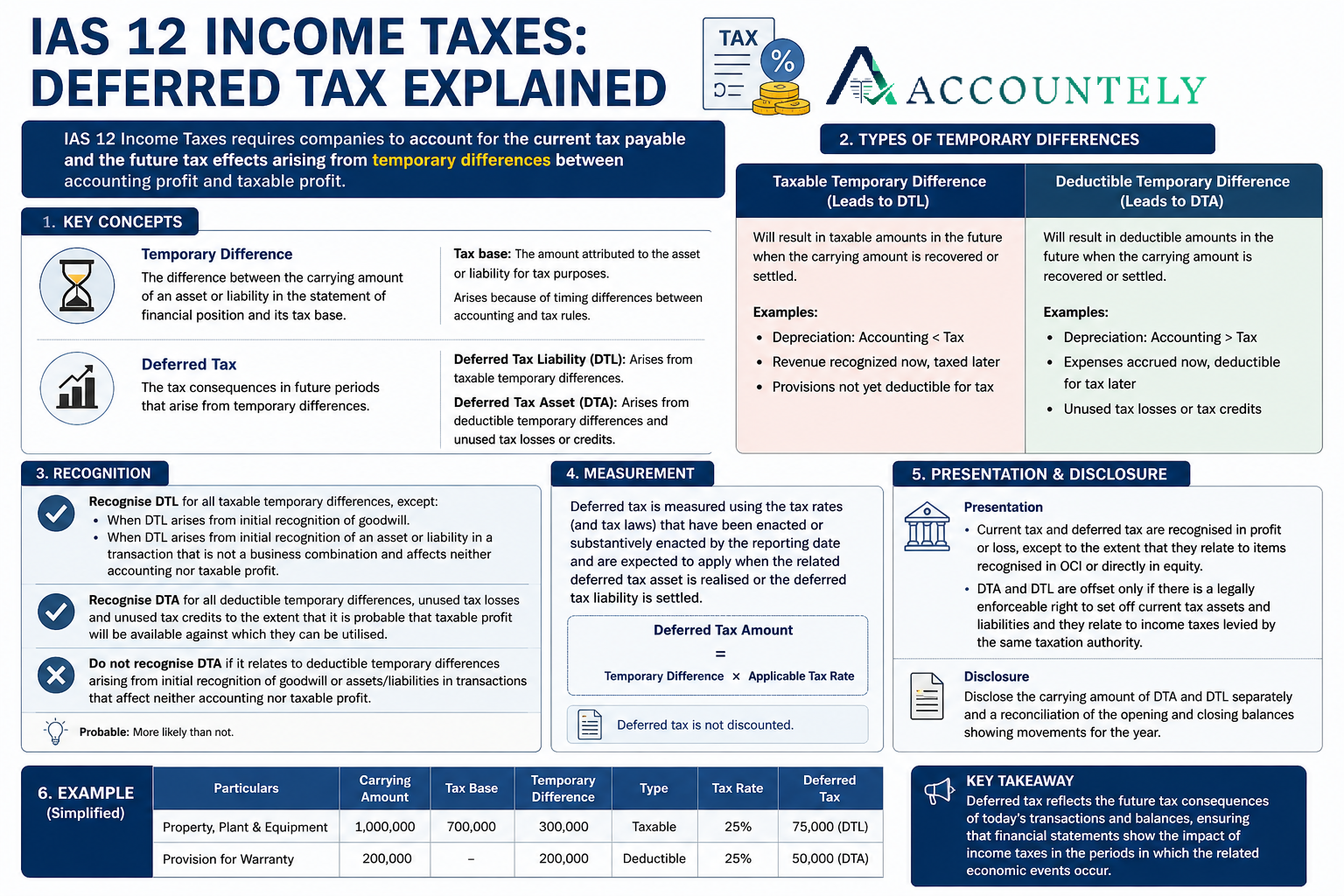
IAS 12 Income Taxes: Deferred Tax Explained With Worked Examples - accountely.com

IAS 12 Income Taxes: Deferred Tax Explained With Worked Examples

Deferred tax stops being mysterious once you see it as a balance sheet exercise. Here is the tax base concept, taxable vs deductible temporary differences, and worked examples of accelerated tax depreciation and a warranty provision.

Read more →
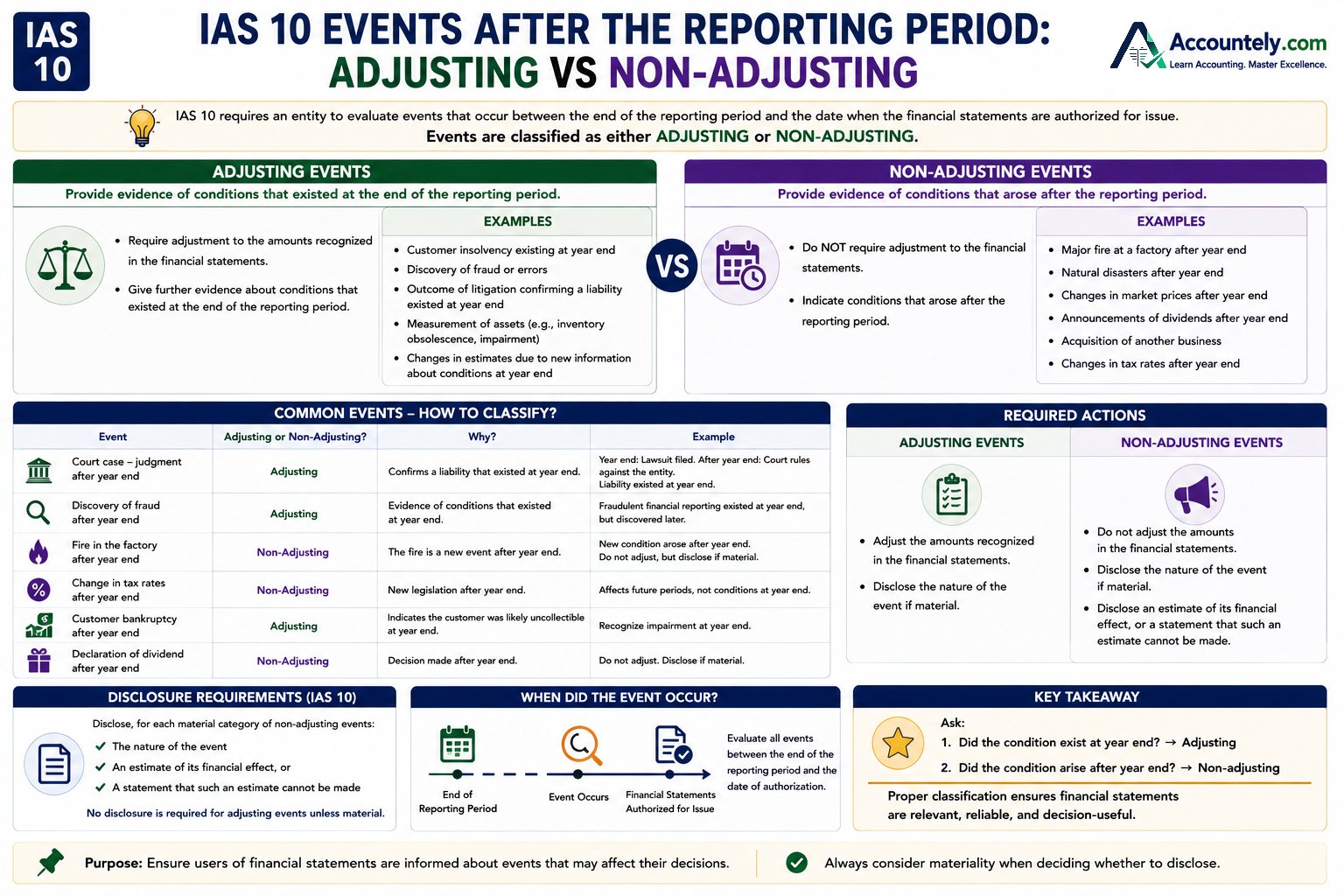
IAS 10 events after the reporting period: adjusting vs non-adjusting events infographic with examples and disclosure requirements — learn IFRS online

IAS 10 Events After the Reporting Period: Adjusting vs Non-Adjusting

Did the event provide evidence of a condition that already existed at the reporting date? That single question decides whether you change the numbers or just disclose. Worked examples, the dividend trap, and the going concern override.

Read more →
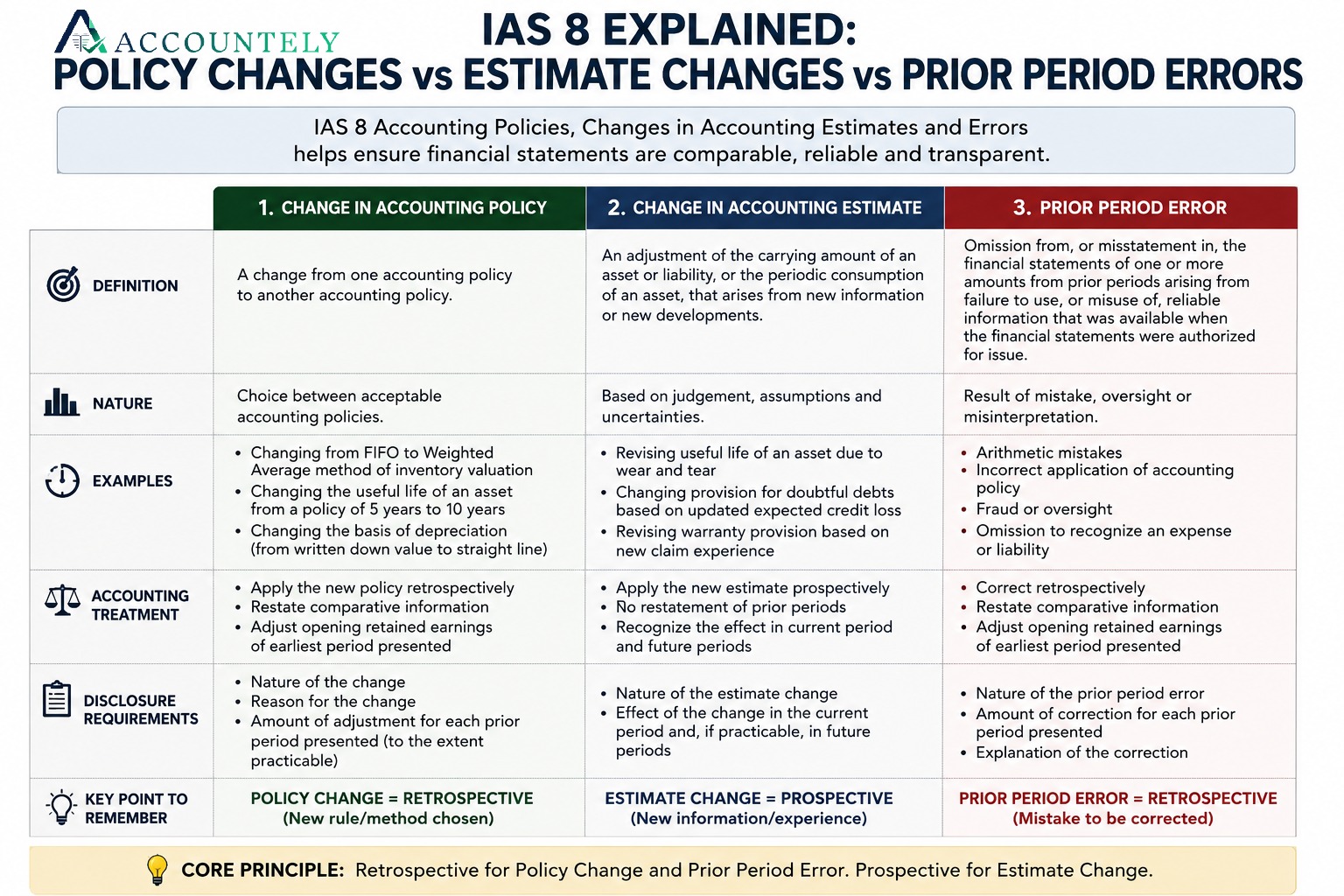
IAS 8 comparison table of accounting policy changes, accounting estimate changes, and prior period errors, with retrospective vs prospective treatment.

IAS 8 Explained: Policy Changes vs Estimate Changes vs Prior Period Errors

Two of these are applied retrospectively and one is not — and telling them apart is the whole question. Here is the classification test, the treatment for each, and worked examples of a useful life revision and a prior period error.

Read more →
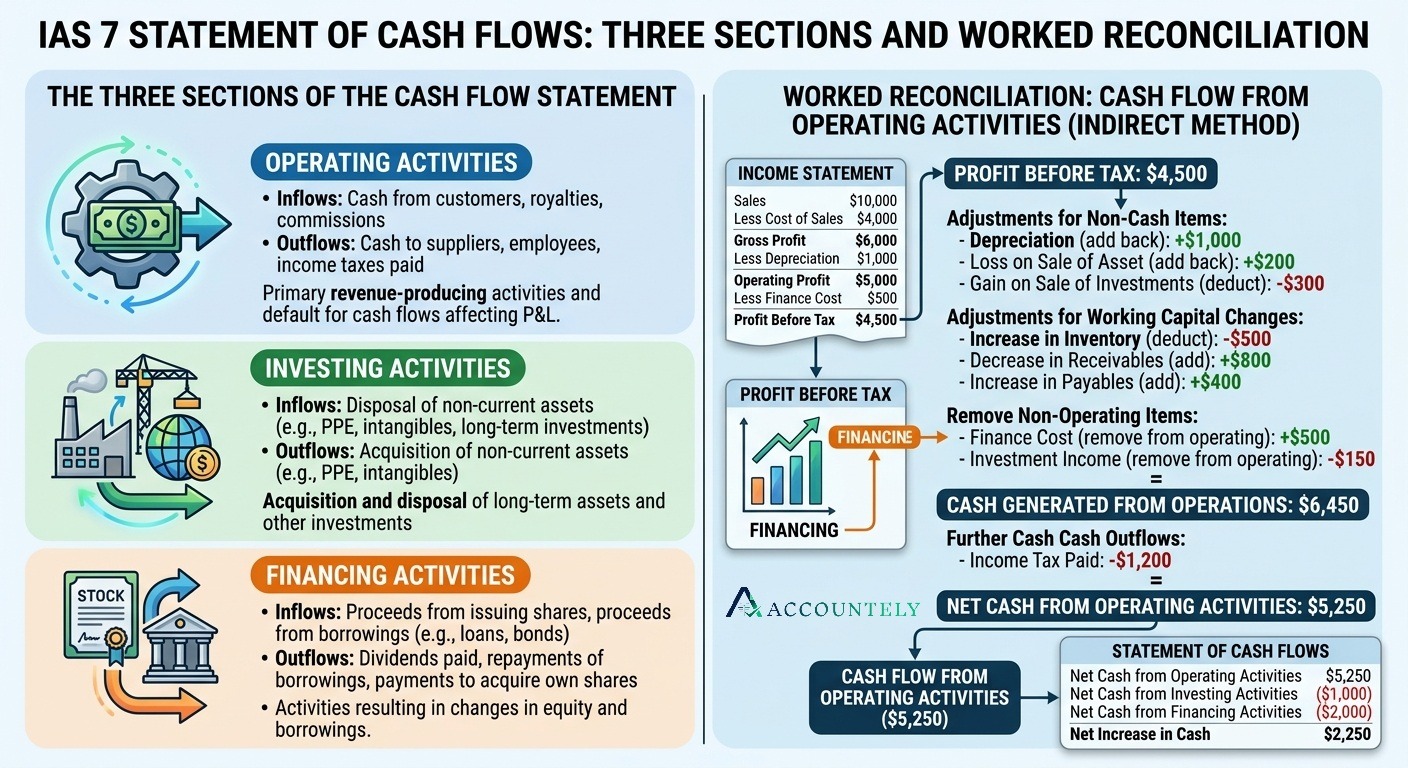
IAS 7 statement of cash flows infographic showing operating, investing, and financing activities with a worked indirect method reconciliation.

IAS 7 Statement of Cash Flows: The Three Sections and a Worked Reconciliation

IAS 7 is the standard behind the statement students dread, because it is the only one built by undoing accrual accounting. Here are the three activity sections, what counts as a cash equivalent, and a full indirect method reconciliation worked line by line.

Read more →
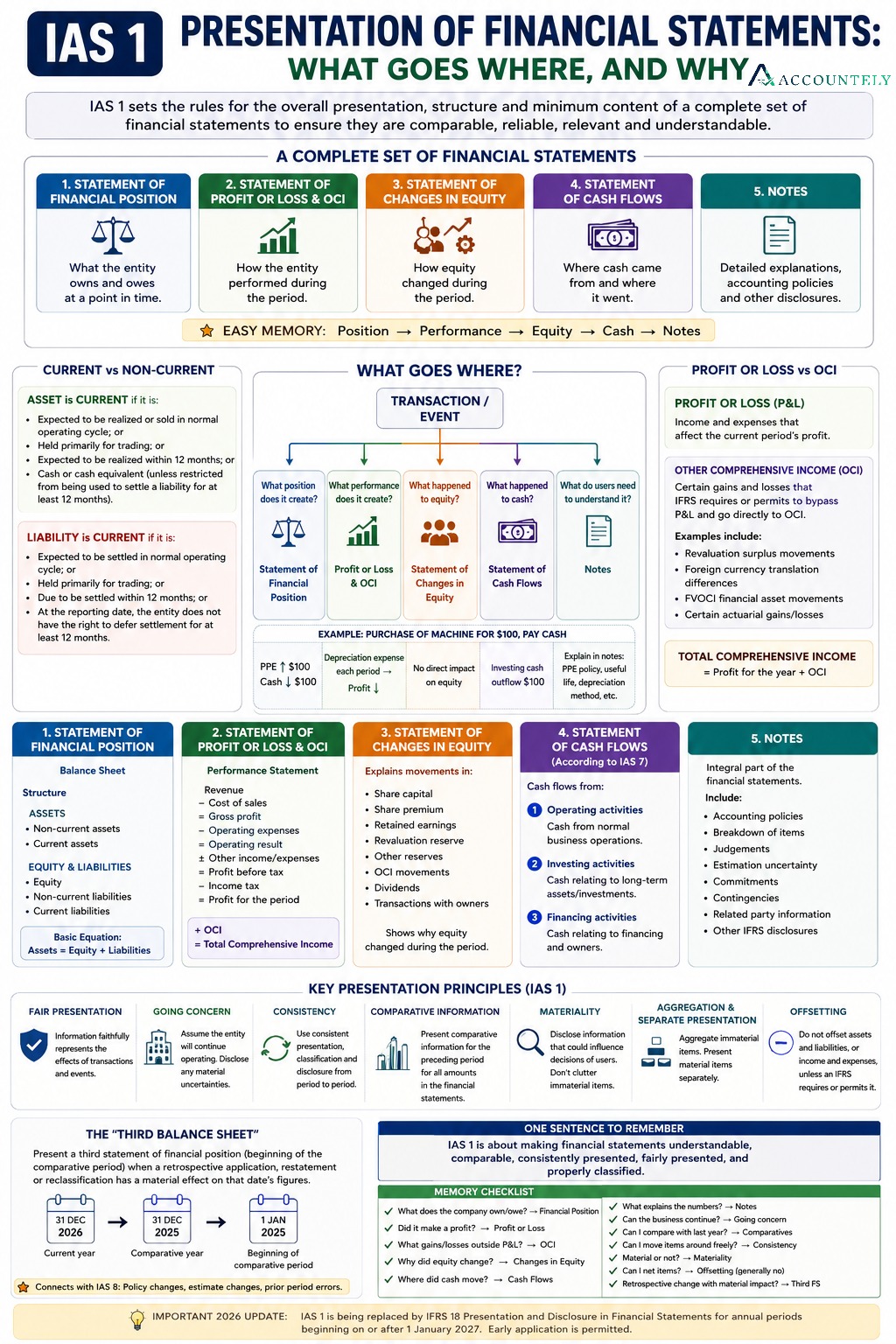
IAS 1 infographic showing the five components of a complete set of financial statements and what goes where.

IAS 1 Presentation of Financial Statements: What Goes Where, and Why

IAS 1 sets out the five statements a complete set of financial statements must contain, the current/non-current split, and the difference between profit or loss and OCI. Presentation marks are the cheapest marks in an exam — here is how to stop losing them.

Read more →
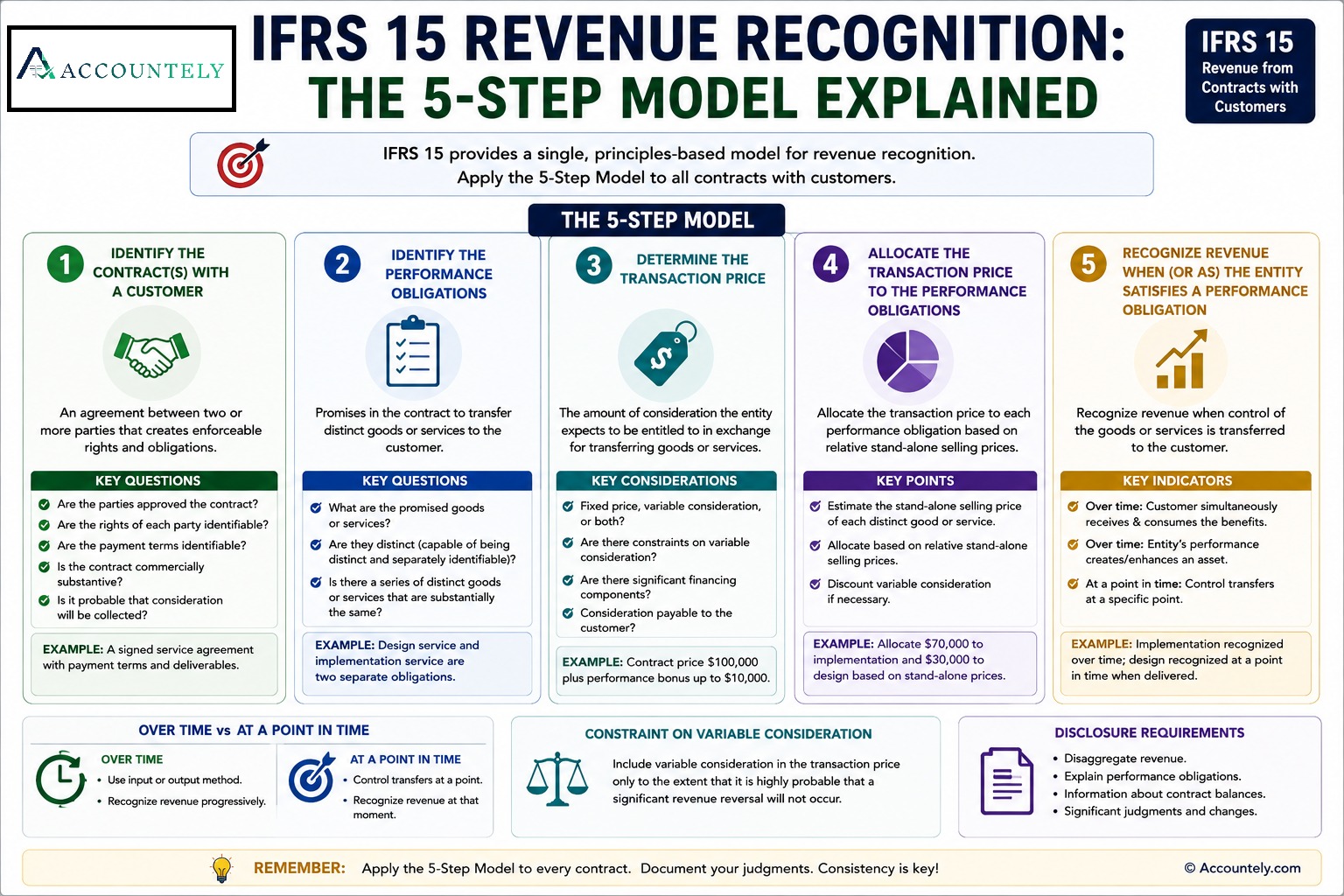
IFRS 15 five-step revenue recognition model infographic: identify contract, performance obligations, transaction price, allocation, and revenue recognition.

IFRS 15 Revenue Recognition: The 5-Step Model Explained

IFRS 15 replaced a patchwork of revenue rules with one five-step model used for every contract. Here is each step explained, plus a worked example allocating a bundled contract price.

Read more →
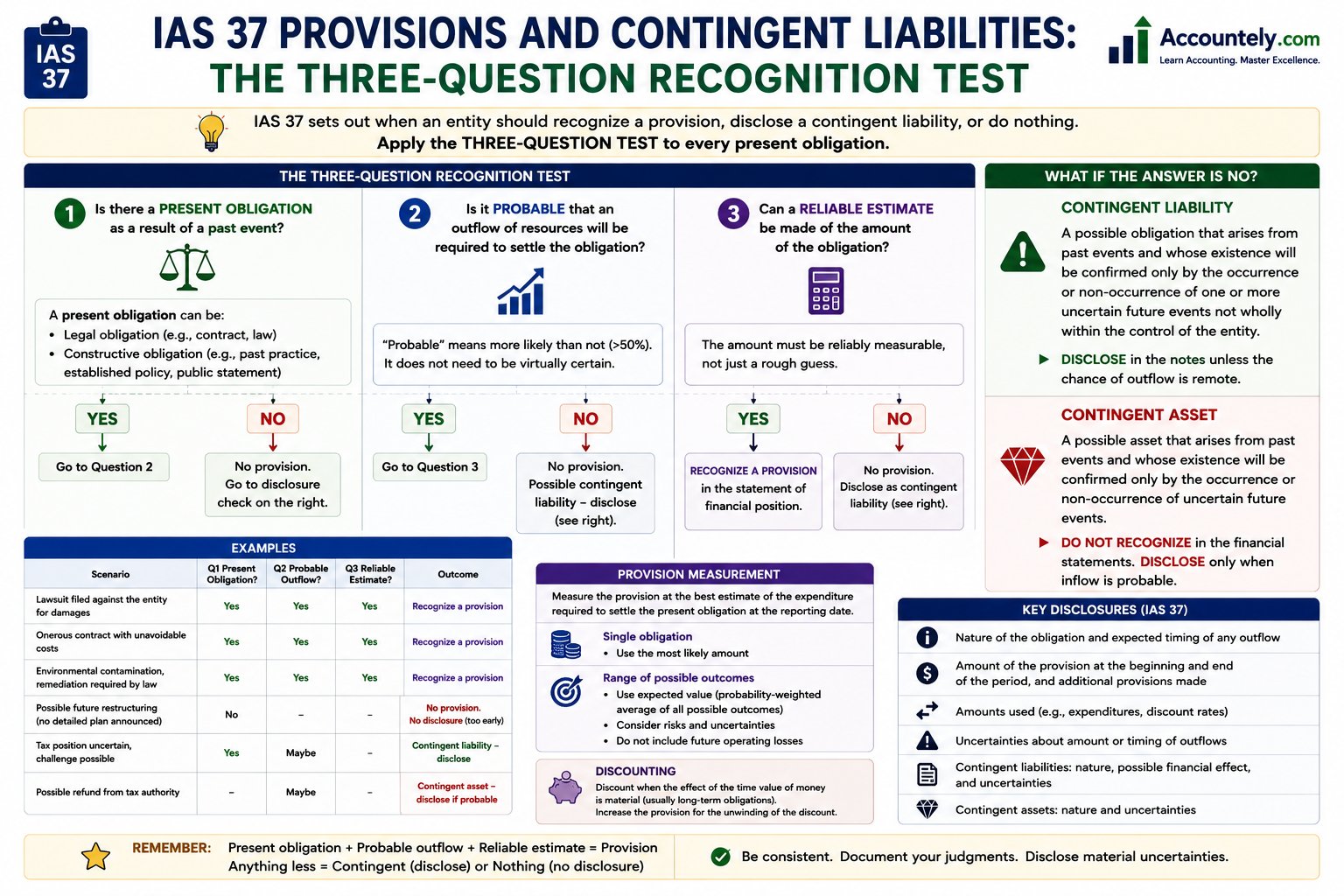
IAS 37 provisions and contingent liabilities: three-question recognition test with examples and disclosure requirements

IAS 37 Provisions and Contingent Liabilities: The Three-Question Recognition Test

IAS 37 decides whether an obligation gets recognized as a provision, disclosed as a contingent liability, or ignored entirely. Here's the three-question test and a worked warranty provision.

Read more →
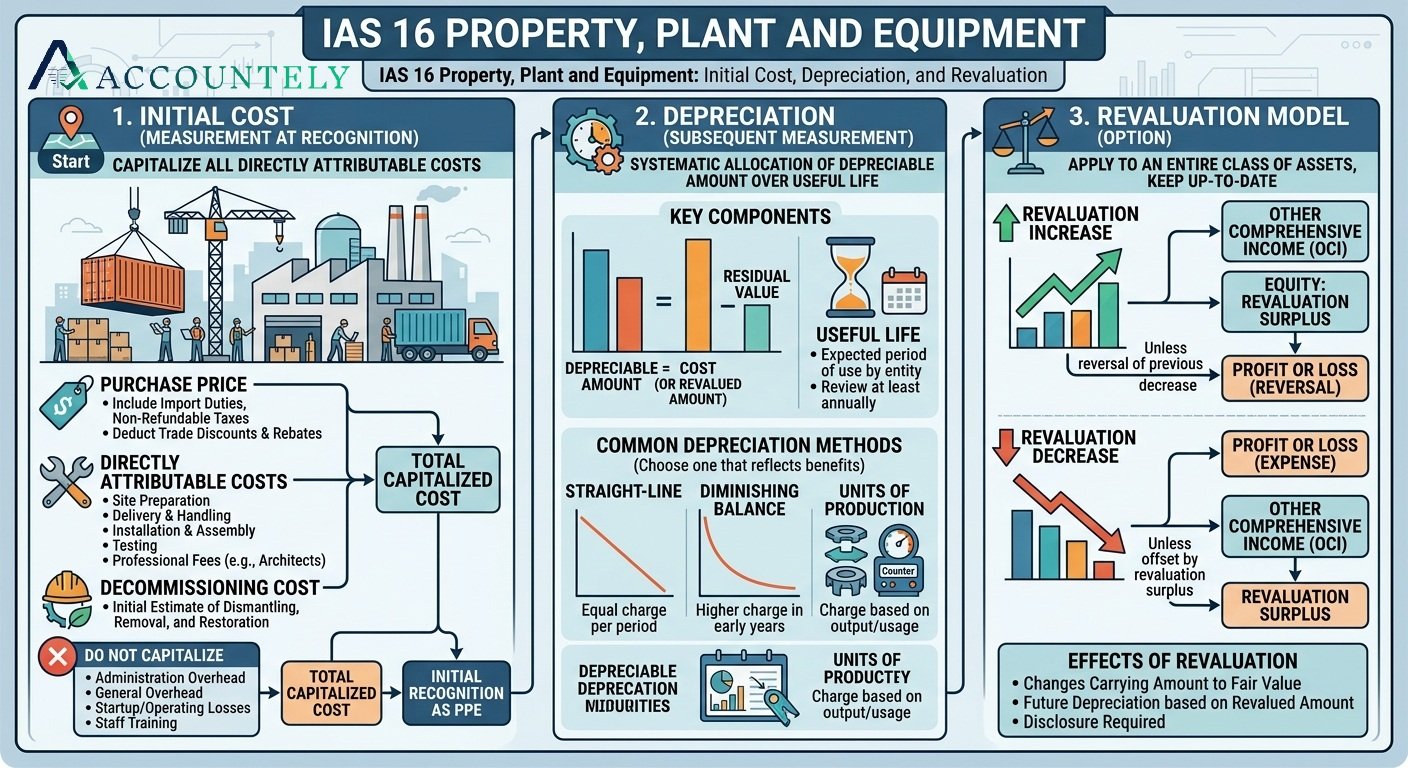
IAS 16 property, plant and equipment: initial cost, depreciation methods, and revaluation model explained — IFRS accounting guide

IAS 16 Property, Plant and Equipment: Initial Cost, Depreciation, and Revaluation

IAS 16 covers what goes into the initial cost of PP&E, how depreciation is calculated, and the revaluation model most students have never used. A worked example of each.

Read more →
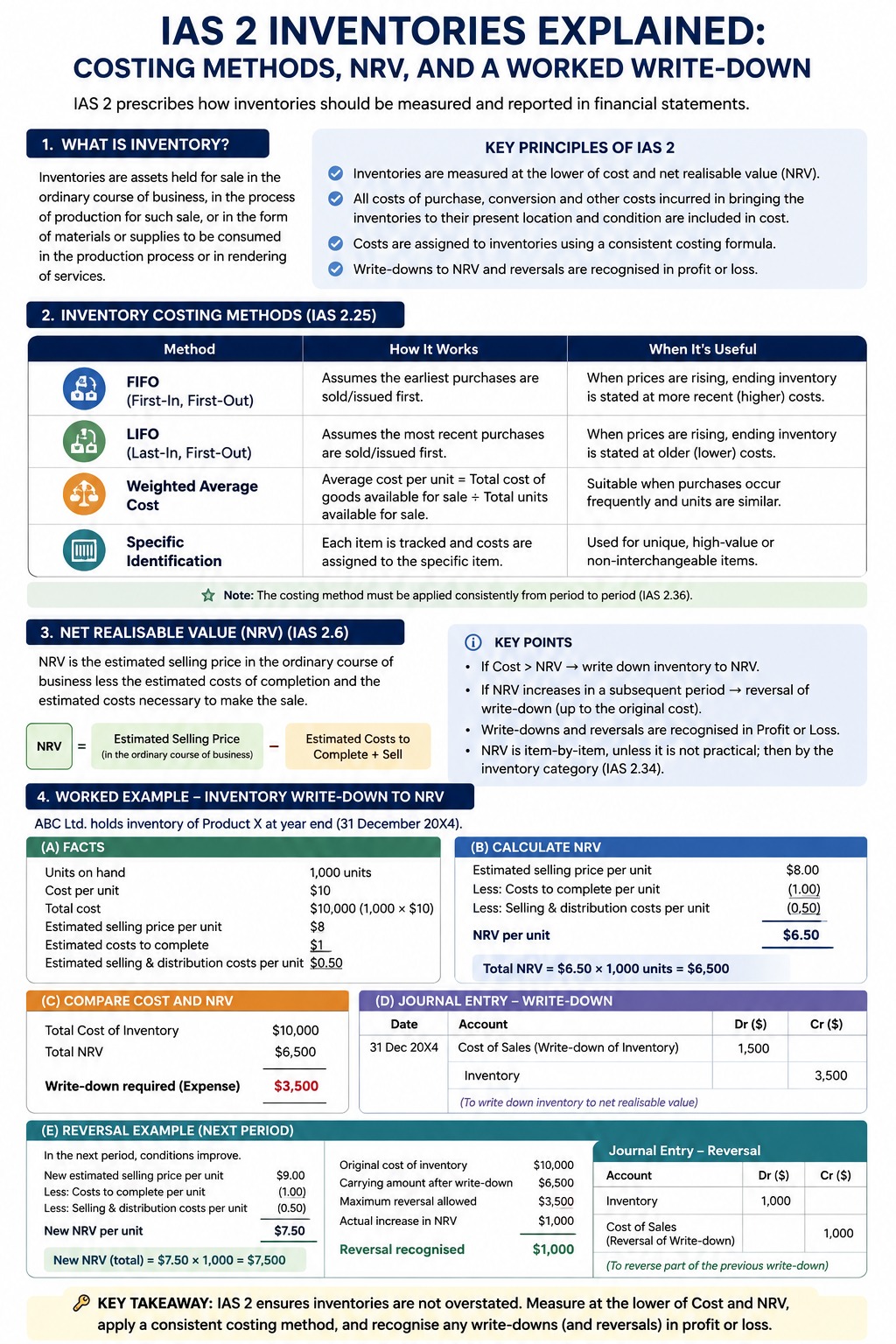
IAS 2 Inventories infographic showing FIFO, LIFO, and weighted average costing methods plus a worked net realisable value (NRV) write-down and reversal example.

IAS 2 Inventories Explained: Costing Methods, NRV, and a Worked Write-Down

IAS 2 governs how inventory is measured and when it must be written down. Here's the lower-of-cost-and-NRV rule, FIFO vs weighted average, and a worked example of a write-down journal entry.

Read more →
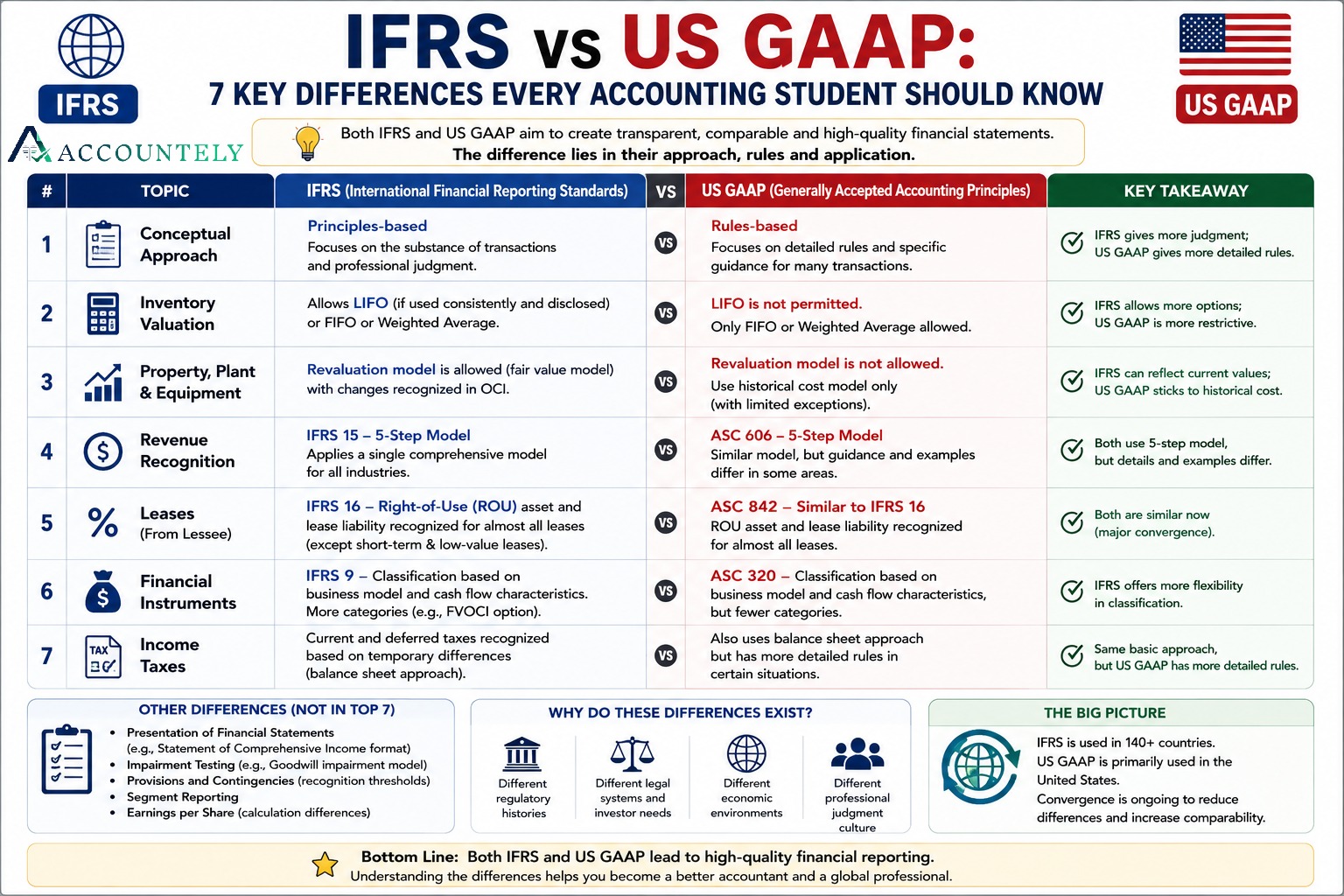
Comparison chart of 7 key differences between IFRS and US GAAP including inventory valuation, PPE, revenue recognition, and leases.

IFRS vs US GAAP: 7 Key Differences Every Accounting Student Should Know

IFRS and US GAAP diverge on inventory costing, leases, development costs, and more. Here are the seven differences accounting students hit most often.

Read more →
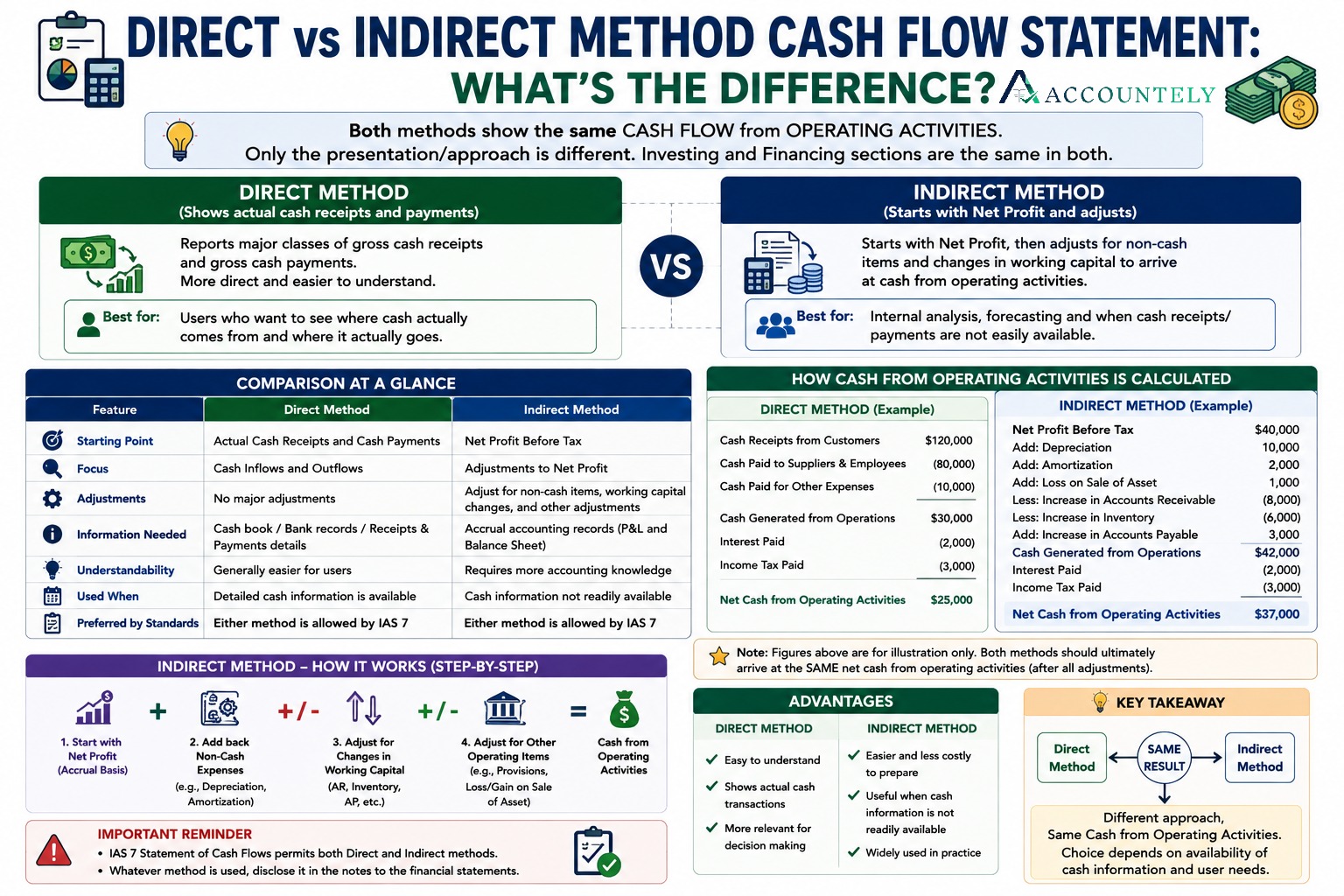
Comparison infographic of the direct method vs indirect method for preparing the cash flow statement under IAS 7, with worked examples of both.

Direct vs Indirect Method Cash Flow Statement: What's the Difference?

IAS 7 allows two ways to present operating cash flows. Here is exactly how the direct and indirect methods differ, with a worked comparison.

Read more →
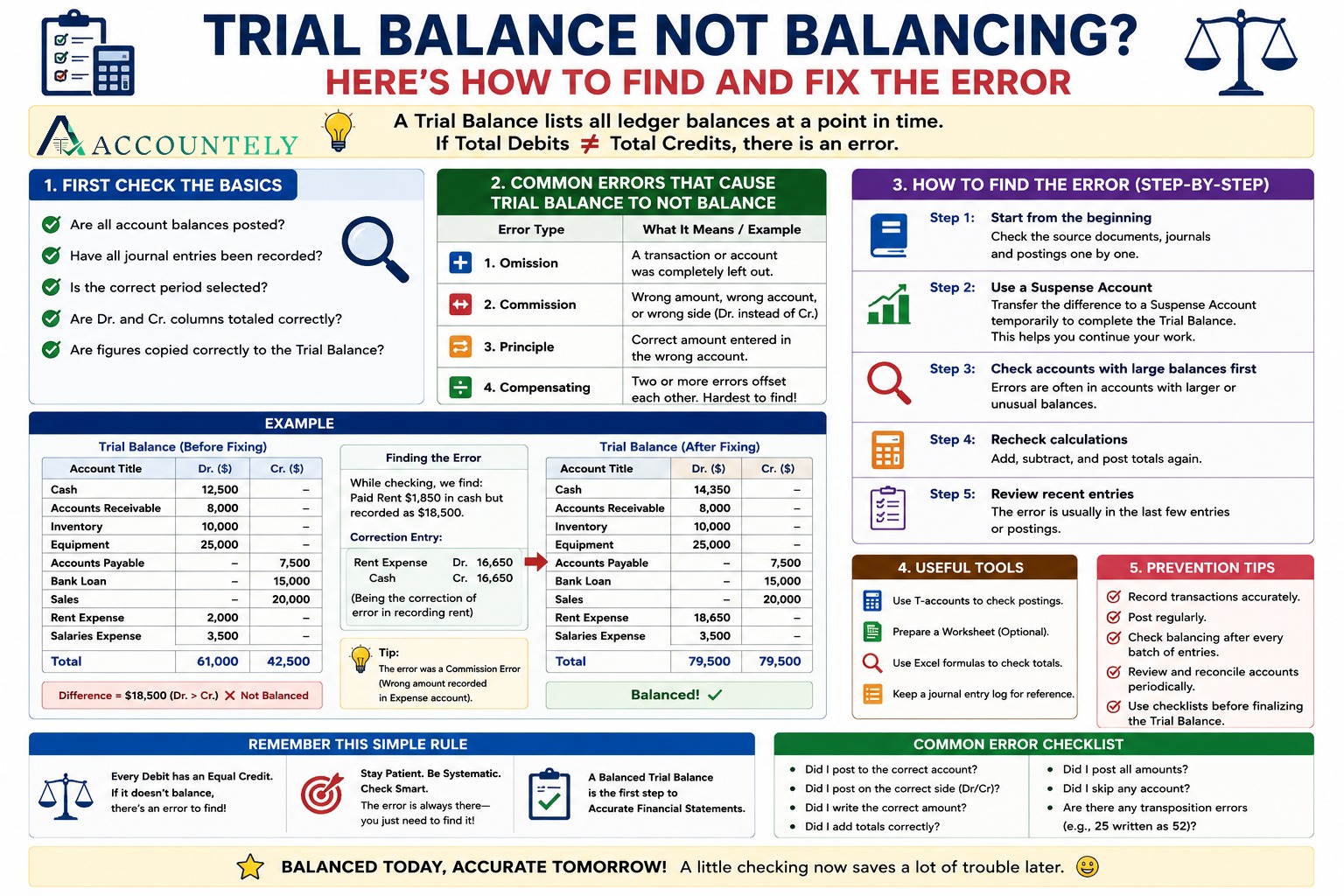
Infographic showing how to find and fix trial balance errors including omission, commission, principle, and compensating errors.

Trial Balance Not Balancing? Here's How to Find and Fix the Error

A trial balance that doesn't balance means there's an error somewhere. This guide walks through the most common causes and how to track them down.

Read more →
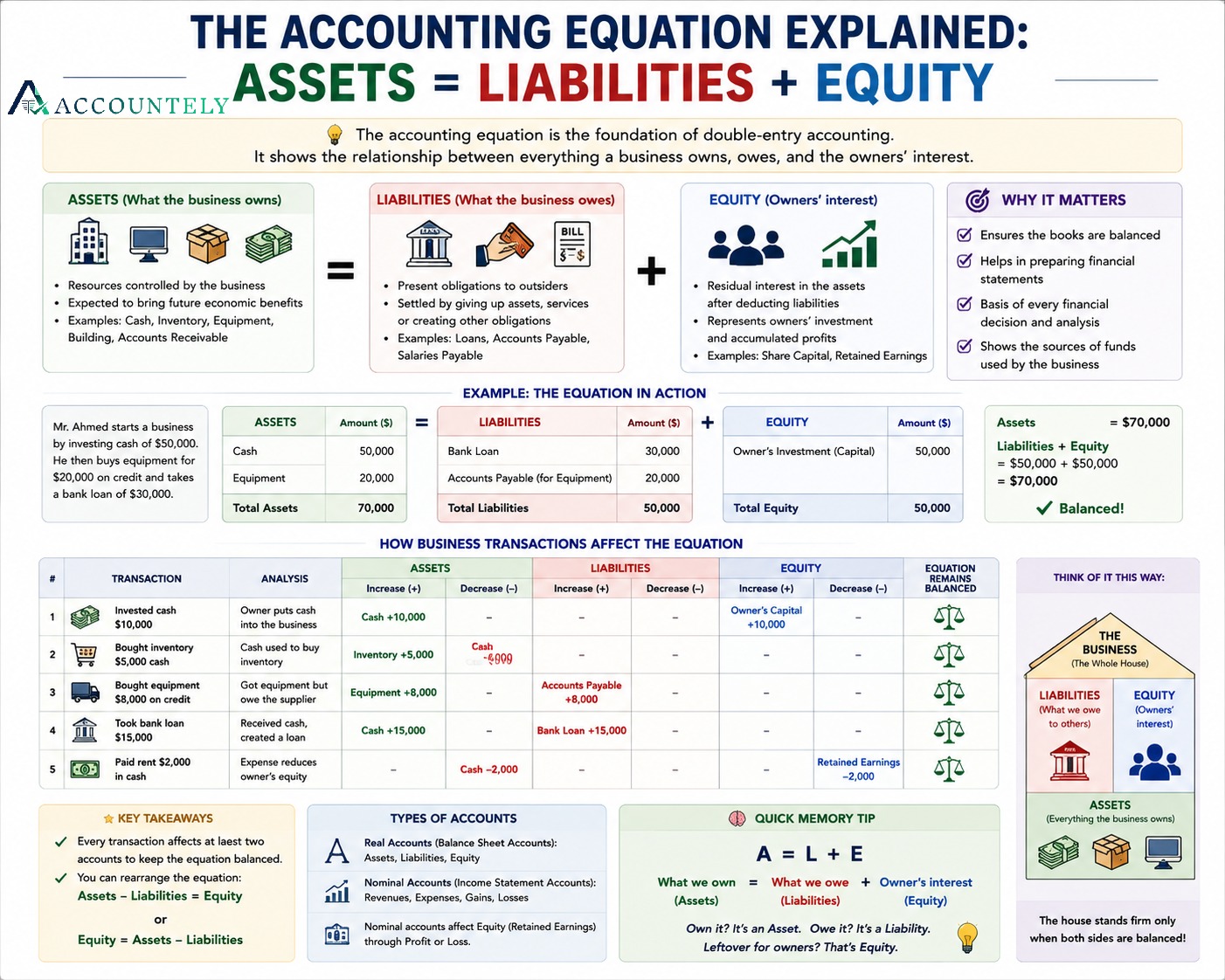
Accounting equation infographic: Assets = Liabilities + Equity, with a worked example and five sample transactions.

The Accounting Equation Explained: Assets = Liabilities + Equity

The accounting equation is the foundation of double-entry bookkeeping. Learn what it means, why it always balances, and see it in action.

Read more →
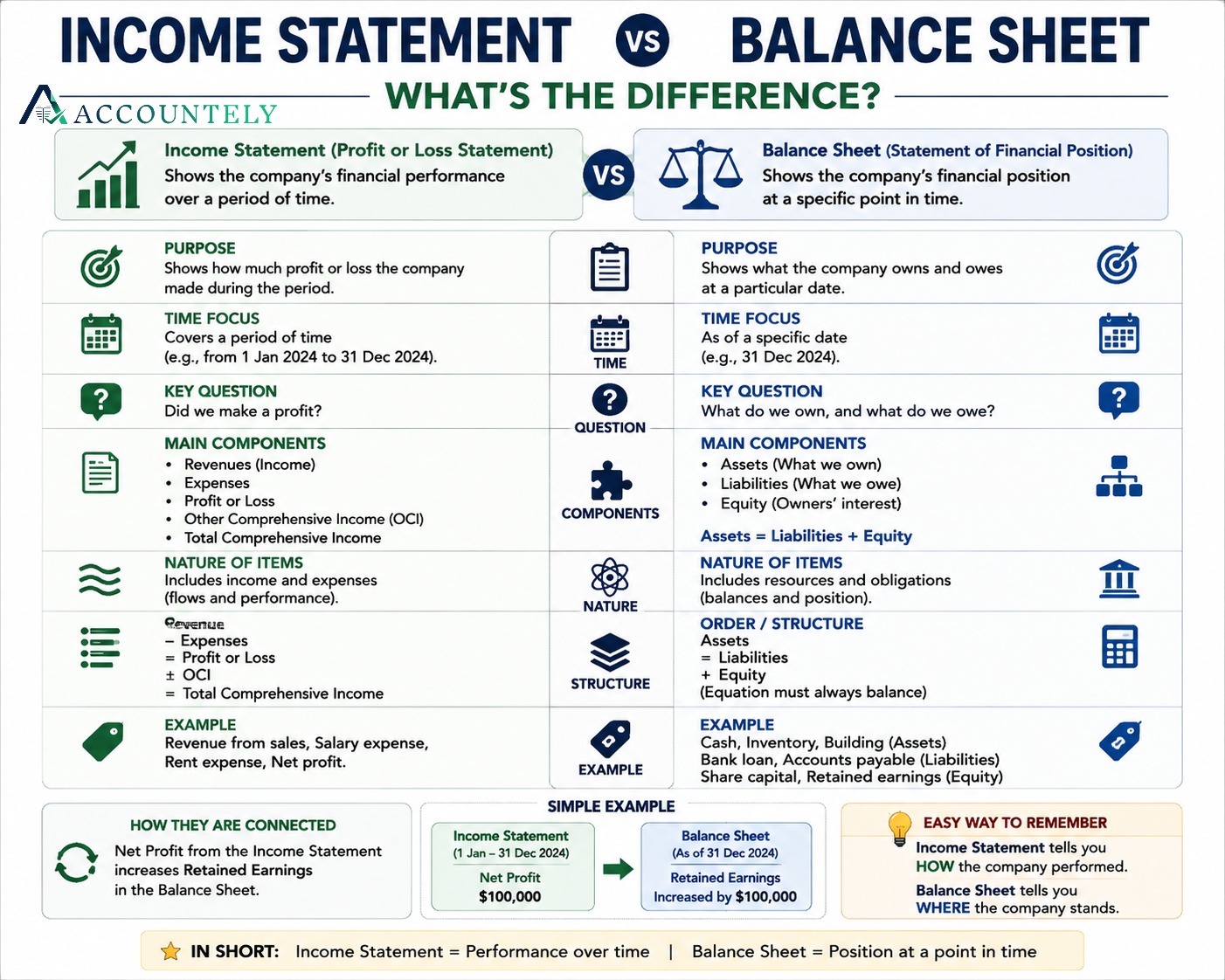
Side-by-side comparison of the income statement and balance sheet showing purpose, time focus, and components.

Income Statement vs Balance Sheet: What's the Difference?

Income statement and balance sheet look similar at first glance but answer completely different questions. Here's exactly how they differ.

Read more →
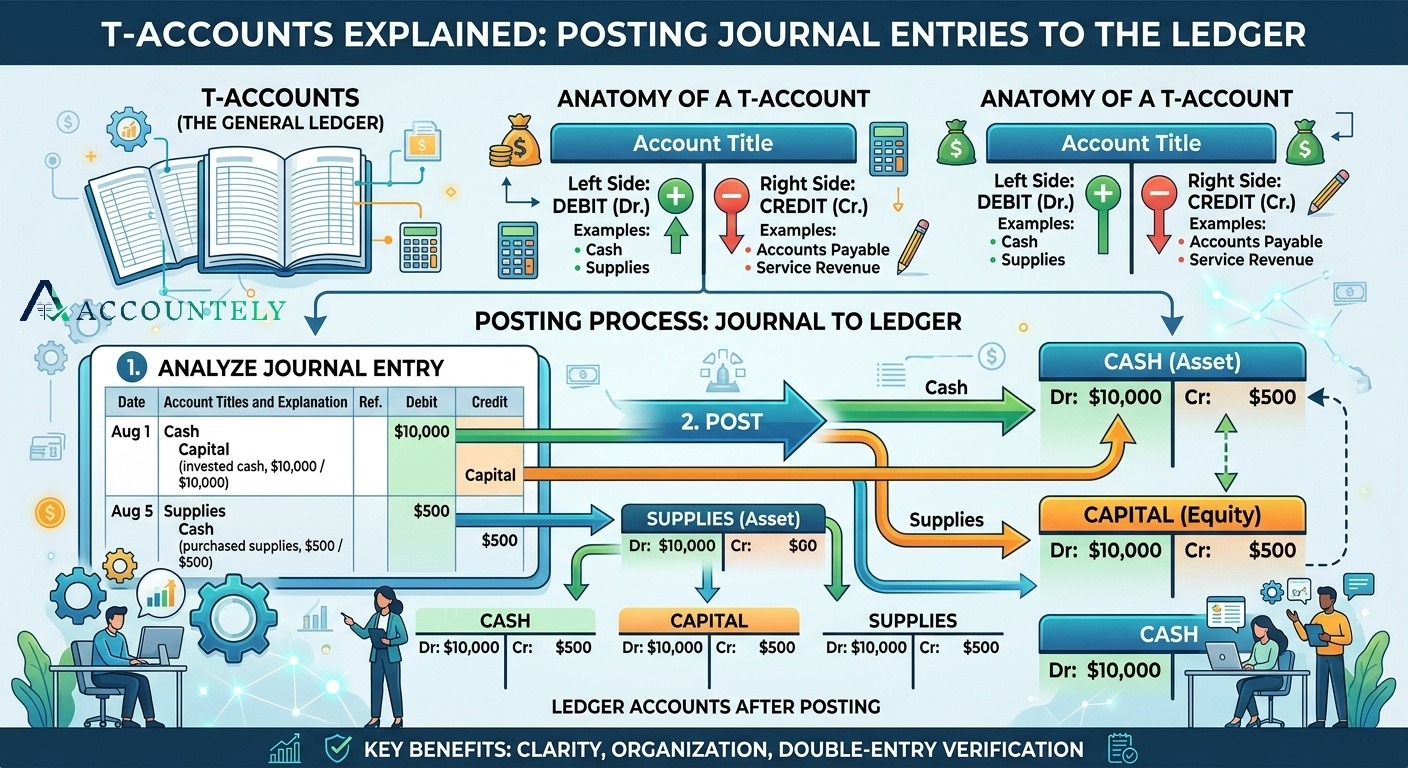
T-accounts infographic showing debit and credit sides and the process of posting journal entries to the general ledger.

T-Accounts Explained: How to Post Journal Entries to the Ledger

Once a journal entry is recorded, it has to be posted to the ledger. Here is how T-accounts work and how to find an account balance.

Read more →
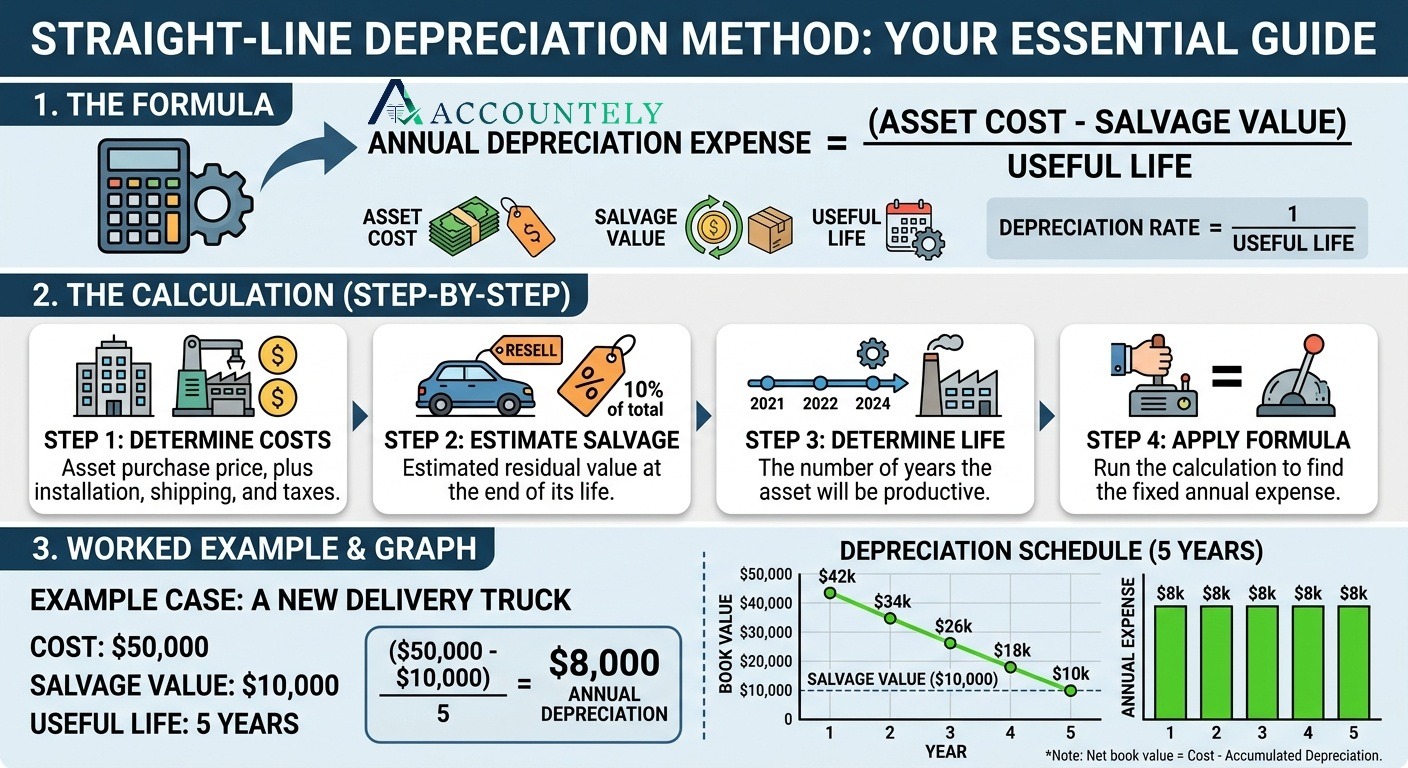
Straight-line depreciation method infographic with formula, step-by-step calculation, and a worked delivery truck example.

Straight-Line Depreciation Method: Formula, Example, and How to Calculate It

The straight-line method is the most common way to depreciate a fixed asset. Here is the formula, a full worked example, and the journal entry.

Read more →
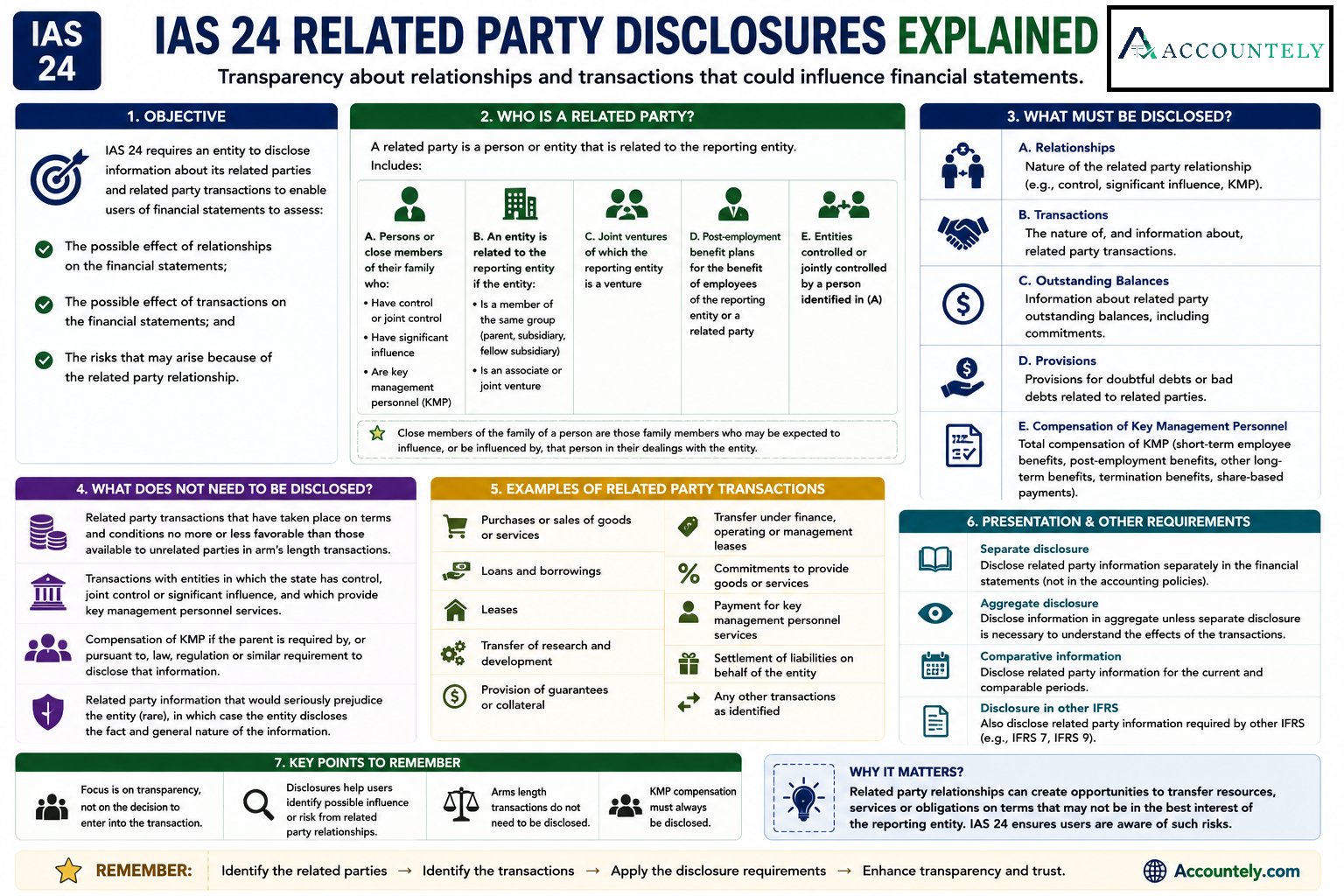
"IAS 24 related party disclosures explained — who is a related party, required disclosures, and transaction examples under IFRS"

IAS 24 Related Party Disclosures Explained

IAS 24 changes what you disclose, never what you measure. Who counts as a related party, who deliberately does not, what must be disclosed even with no transactions, and a worked scenario.

Read more →
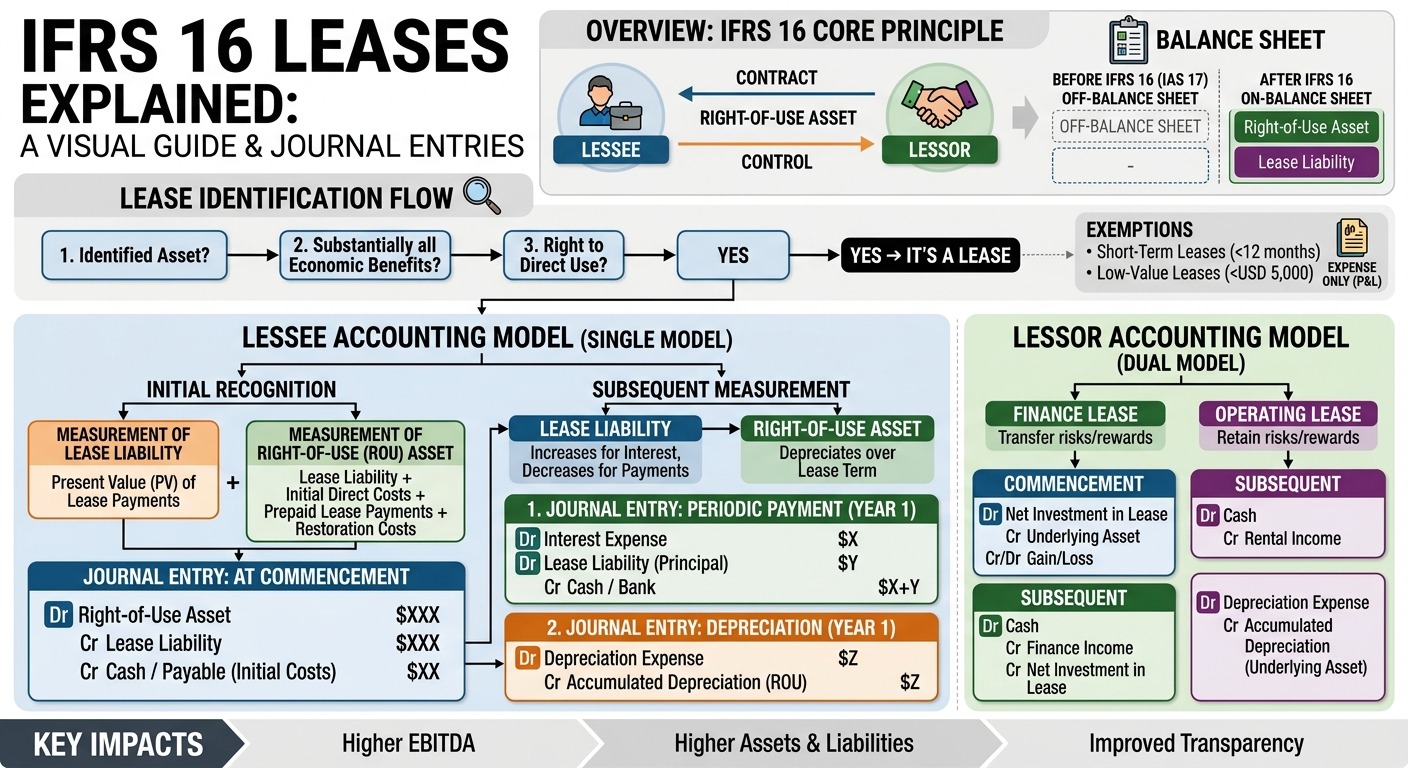
IFRS 16 leases infographic showing lessee and lessor accounting models with right-of-use asset and lease liability journal entries.

IFRS 16 Leases Explained, With Journal Entries

IFRS 16 put almost every lease on the balance sheet. Here is the single lessee model, how to measure the right-of-use asset and lease liability, a worked example with journal entries, and the two exemptions.

Read more →
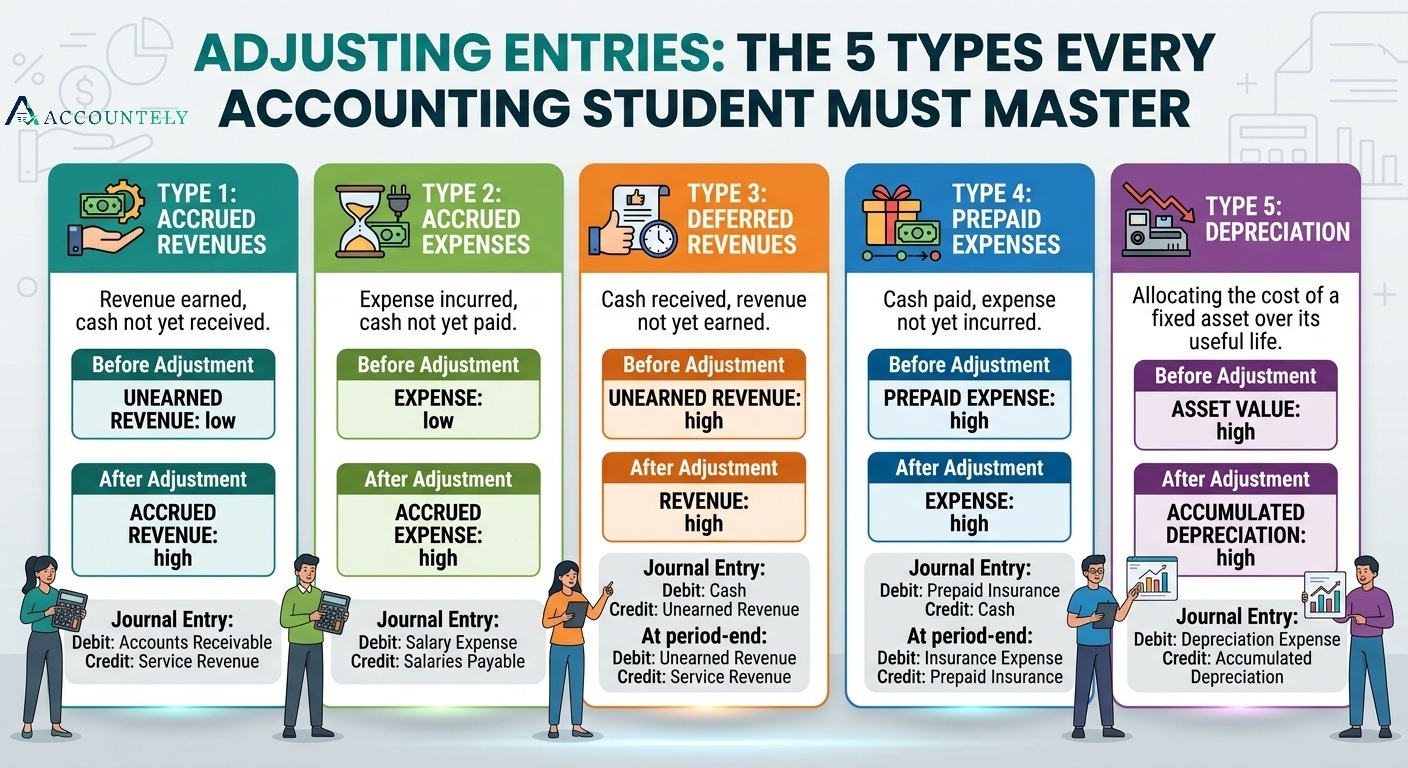
Infographic explaining the 5 types of adjusting entries in accounting: accrued revenues, accrued expenses, deferred revenues, prepaid expenses, and depreciation.

Adjusting Entries: The 5 Types Every Accounting Student Must Master (With Examples)

Adjusting entries are where most students lose points on exams. Here are the five types you will always see, each with a worked example.

Read more →
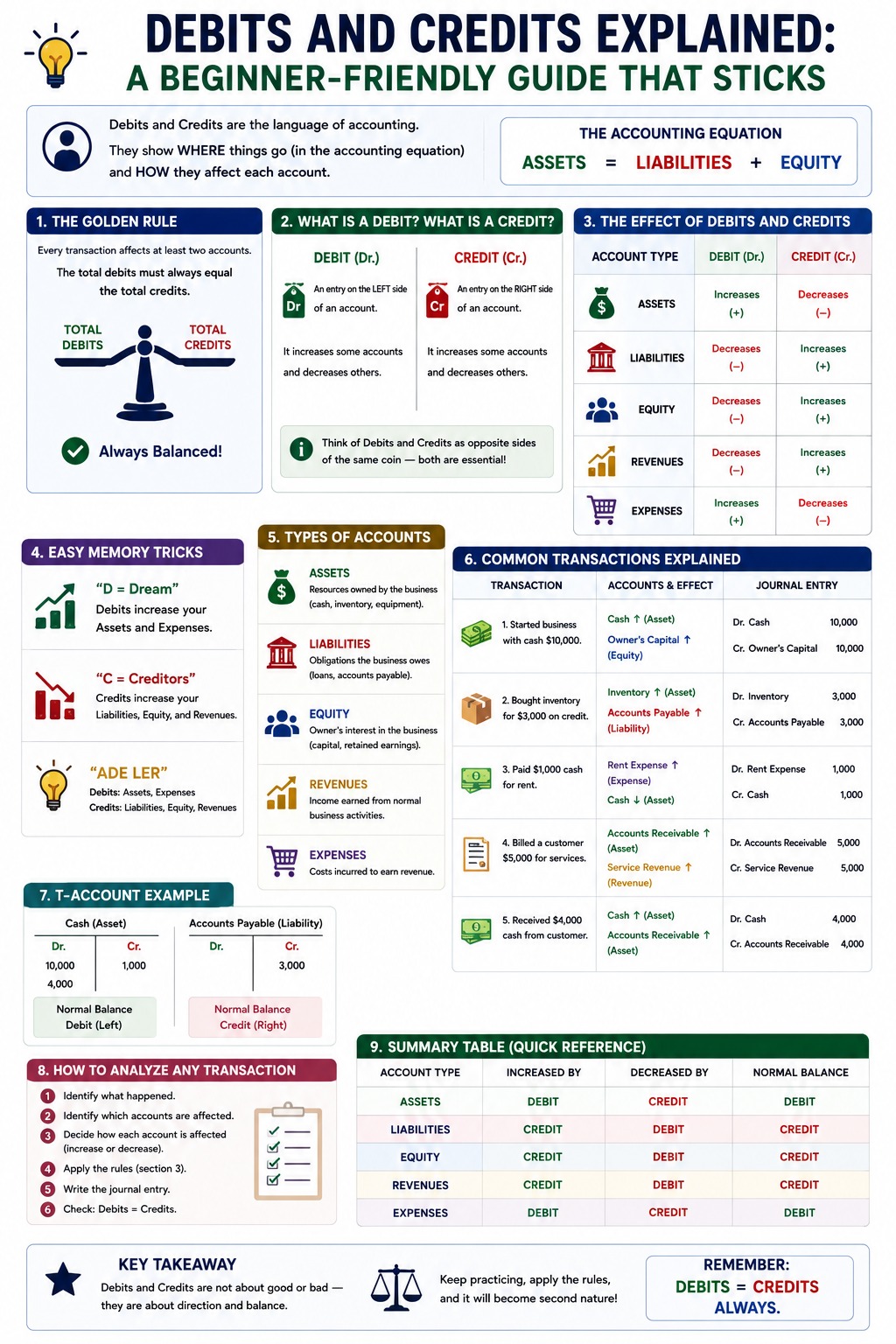
Beginner-friendly infographic explaining debits and credits, the golden rule, and how they affect assets, liabilities, and equity.

Debits and Credits Explained: A Beginner-Friendly Guide That Sticks

Forget memorising tables. Understand the one rule behind debits and credits, see it applied to every account type, and learn the DEALER mnemonic that makes it stick.

Read more →
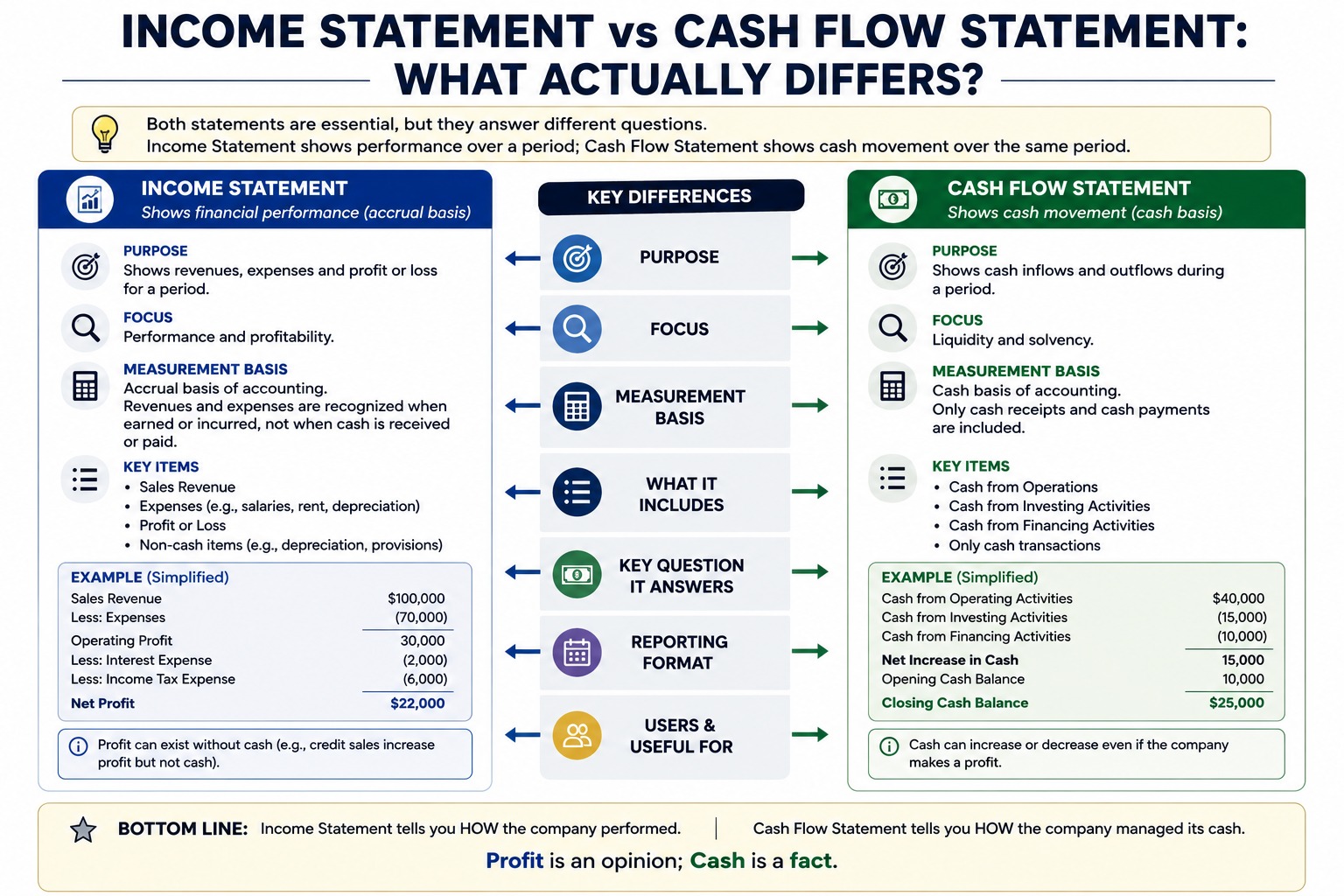
Comparison infographic of the income statement and cash flow statement showing purpose, focus, and measurement basis differences.

Income Statement vs Cash Flow Statement: What Actually Differs?

Profit is not cash. Learn what the income statement and cash flow statement each measure, why a profitable company can run out of money, and how the two statements reconcile.

Read more →
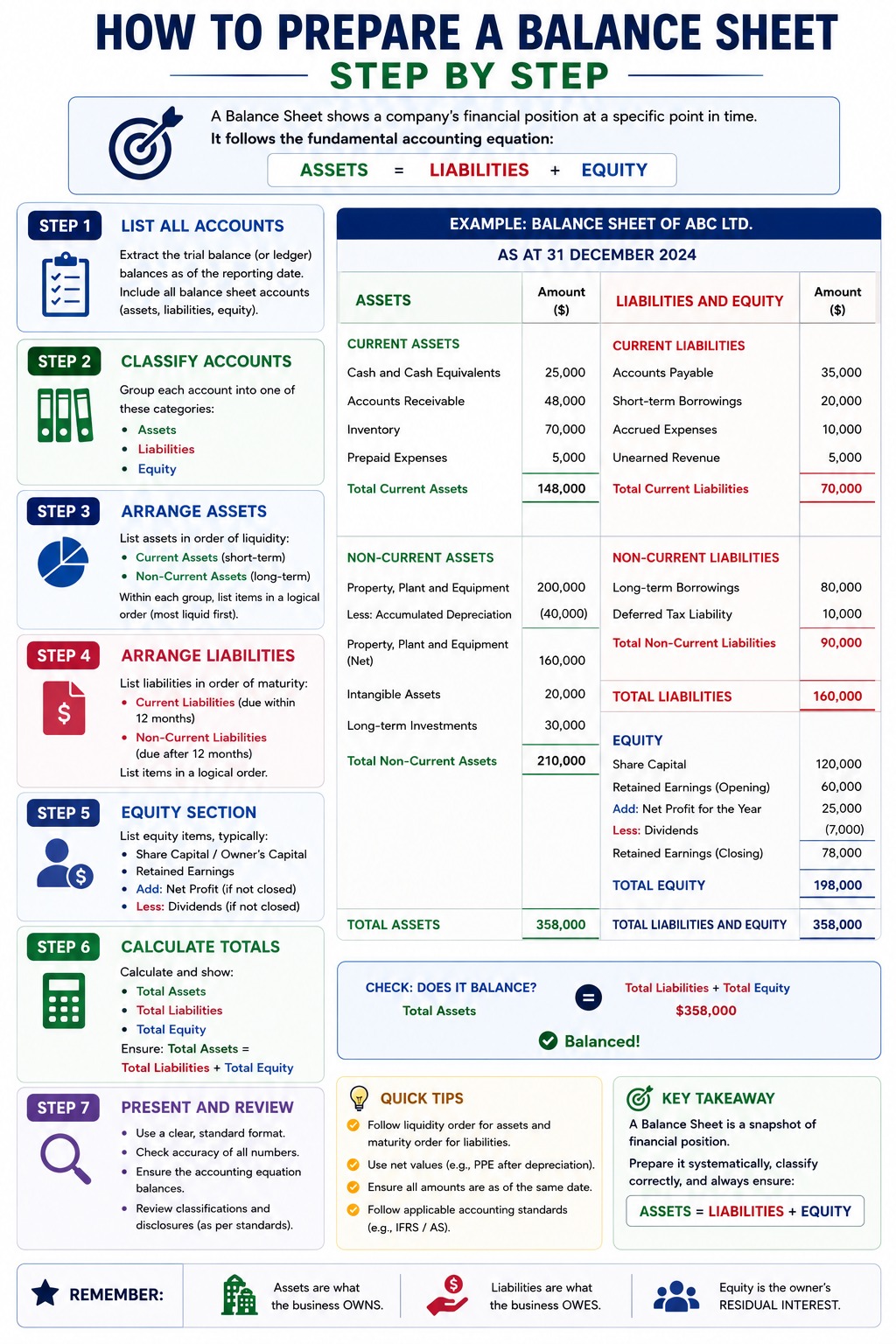
Seven-step infographic on how to prepare a balance sheet, from listing accounts to checking that it balances.

How to Prepare a Balance Sheet Step by Step (with Example)

A practical, step-by-step guide to preparing a balance sheet: ordering assets and liabilities, classifying current vs non-current items, and making it balance — with a worked example.

Read more →
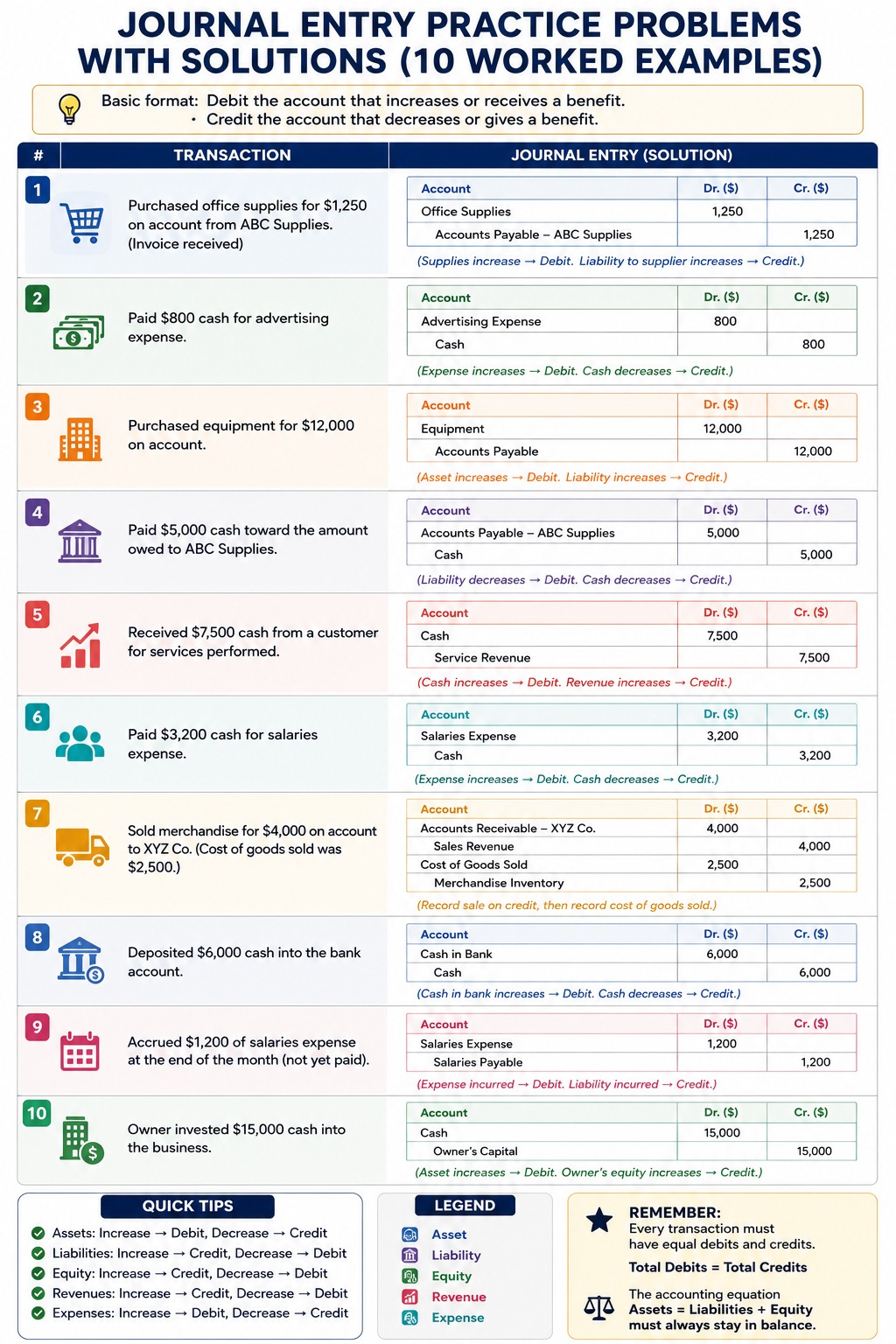
10 worked journal entry practice problems with solutions covering supplies, equipment, revenue, salaries, and accruals.

Journal Entry Practice Problems with Solutions (10 Worked Examples)

Ten journal entry practice problems with full solutions and explanations — from owner investment to accrued expenses. Learn the debit/credit logic behind each one.

Read more →